Every unanswered product question is a sale that does not happen. A customer who cannot quickly find out whether a jacket runs small, whether a laptop ships with an EU power adapter, or whether a sofa comes in olive green will close the tab and buy somewhere else. They will not email. They will not wait.
That is the problem an AI chatbot solves for e-commerce — not in a vague, futuristic way, but right now, on the product pages where purchase decisions actually happen.
What product questions look like at scale
In a store with more than a few hundred products, no human support team can be fast enough. A customer asking "Do you have running shoes in a wide width under $80?" needs an answer in seconds, not a 4-hour email response. The same customer asking "What's the difference between the Pro and Standard model of this stand mixer?" is in the middle of comparing — and comparison time is buying time.
An AI chatbot connected to your product catalog can answer both questions instantly. More importantly, it can answer them accurately, because it is reading your actual product data — not guessing from a general language model's training set.
Product catalog integration: how it works
Promptly connects to your product catalog through a catalog sync. You point it at your product API or data export, and it indexes titles, descriptions, specifications, prices, availability, categories, and images. When a customer asks a question, the bot queries this index in real time.
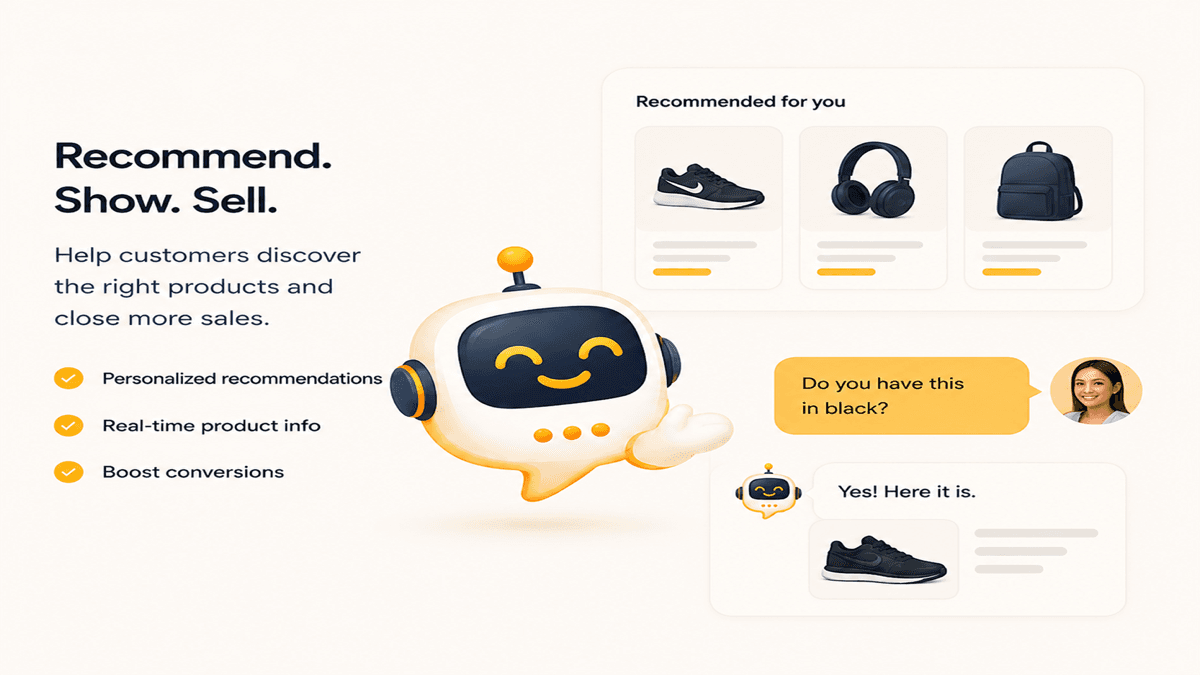
The result is chat answers that look like this: instead of a text response saying "We have several running shoes in wide widths," the bot surfaces actual product cards — thumbnail image, name, price, key specs — that the customer can click through to buy immediately. The conversation becomes a shopping assistant, not a FAQ lookup.
Filters that actually understand natural language
Most product search on e-commerce sites requires the customer to know your taxonomy. If your facets say "Heel Height: 3-4cm" but a customer types "mid heel," they get zero results. A chatbot does not have this problem. It understands the relationship between natural-language descriptions and the structured data underneath.
- "Show me sofas under €600 that come in grey" — the bot applies a price filter AND a color filter simultaneously.
- "What's your most popular laptop for students?" — the bot interprets intent and surfaces relevant options, not just a category page.
- "Do any of these come with free shipping?" — the bot reads your shipping rules and applies them to the result set.
This kind of query is impossible for a traditional search bar. For a catalog-connected chatbot, it is a routine lookup.
The conversion window is narrow — speed is everything
Research consistently shows that response time is the single biggest factor in whether a customer service interaction leads to a purchase. The window between "I have a question" and "I'll buy it elsewhere" is measured in seconds, not minutes. A chatbot that answers in under two seconds beats a human support agent who answers in two hours every single time for pre-purchase intent.
This is not about replacing your support team for complex post-purchase issues. It is about capturing the easy wins — the product questions that a human would answer in one sentence — automatically, at scale, at any hour.
What to track after you launch
After your chatbot goes live, Promptly's analytics surface the product questions your customers ask most often. This is genuinely useful beyond just chatbot performance — it tells you where your product descriptions are insufficient, which products generate the most confusion, and which comparison questions come up repeatedly (which might suggest a comparison table is missing from your site).
- Top questions by product — see which pages generate the most chat activity.
- Unanswered questions — the gaps in your catalog data that the bot had to say "I don't know" about.
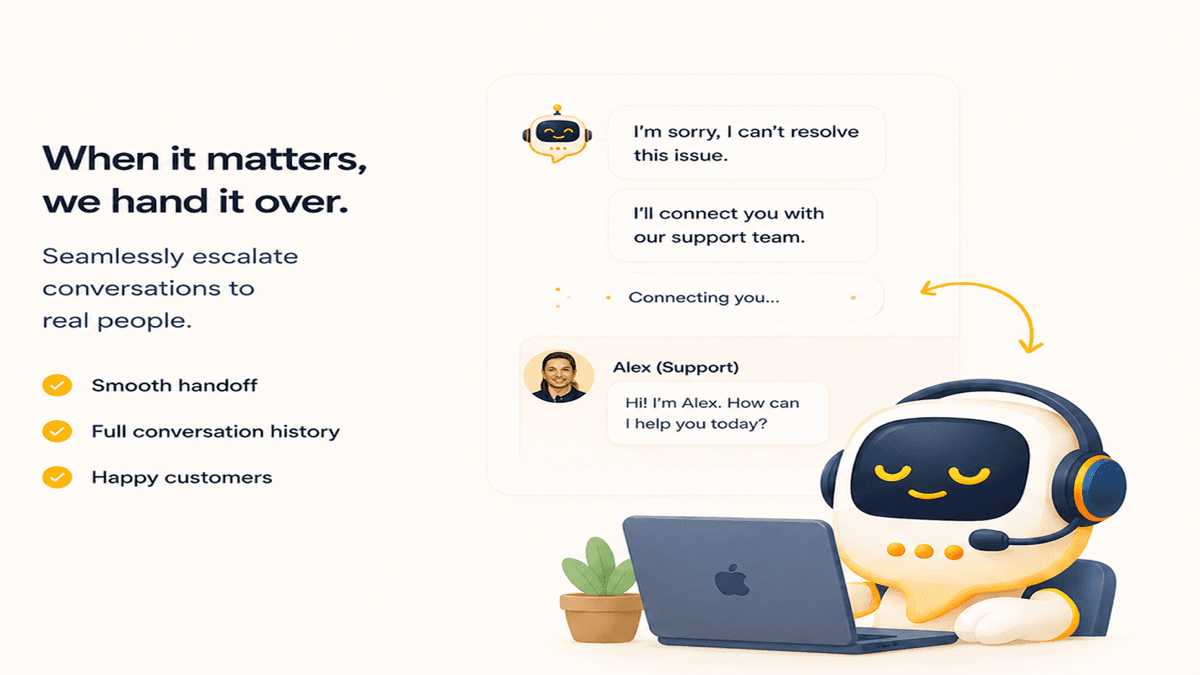
- Handoff rate by category — where customers are most likely to need human help.
You have the data. Promptly connects to it, indexes it, and turns it into a shopping assistant that works around the clock. Catalog sync is part of the Product Catalog module — start your trial and connect your first catalog in under ten minutes.